Quick Summary
Choosing the right futures prop firm comes down to a handful of concrete factors rather than marketing claims: the profit split and how its scaling structure works over time, the drawdown rules and drawdown limit that define your real risk room, how fast payouts are processed once you reach funded status, and whether the trading platform and data feed actually fit your trading style. Evaluation structure, trading rules, and account size options round out the picture together; these criteria separate a reputable firm that supports trader success from one that simply looks appealing on the surface.
This guide breaks the decision down into the factors that actually matter for futures prop trading: profit split, drawdown, payout speed, platform support, and fees, so that whether the firm you're evaluating is a well-known name or a newer entrant, you'll know exactly what to check before you apply.
────────────────────────────────────────────────────────────
Introduction
The number of futures prop trading firms has grown quickly, and with that growth comes a flood of offers: bigger account sizes, faster get funded promises, instant funding options, and headline profit splits that all sound appealing at first glance. But not every prop firm is built the same way, and the difference between a firm that supports your trading journey and one that works against it usually comes down to details buried in the terms and conditions rather than the marketing page.
This article is a buyer's guide, not a rundown of any single prop firm account or a head-to-head scorecard. Instead, it's built around the criteria a trader should walk through before committing to any futures prop firm, whether that's a well-established name like Topstep, Apex Trader Funding, or Take Profit Trader, a firm frequently discussed on Reddit, or a newer platform most traders haven't heard of yet.
How to Choose the Right Futures Prop Firm: The Core Criteria
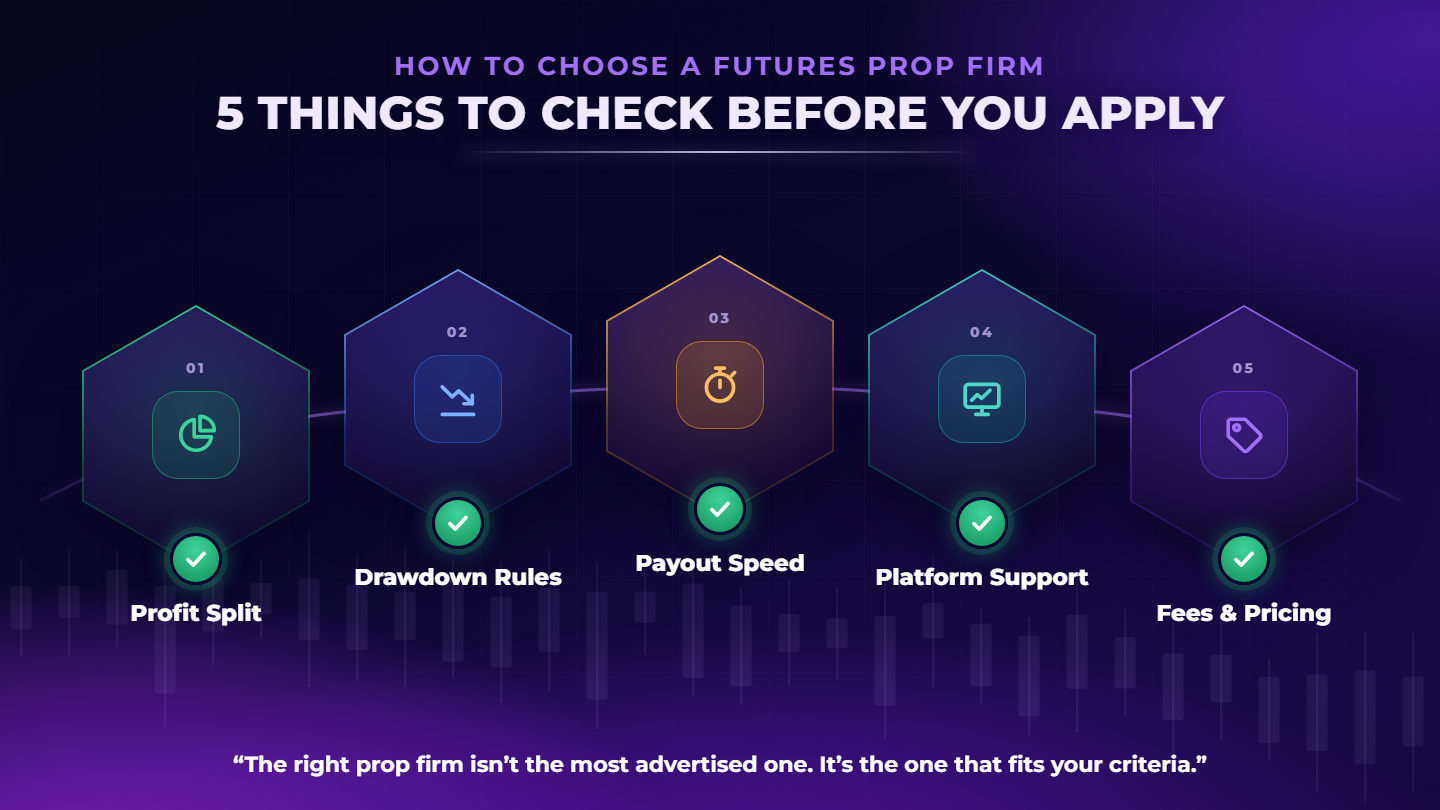
Before diving into the specifics, it helps to know what you're actually evaluating. A prop firm’s value to you isn't just its profit split percentage; it's the combination of profit split, drawdown structure, payout process, trading platform, and rules that together determine whether you can actually trade your normal trading style and get paid for it. Below is the checklist this guide walks through, followed by a deeper look at each factor.
Many prop firms present a nearly identical funnel: sign up, pass a challenge, get funded, but the broader prop trading landscape includes meaningful differences beneath that surface. Knowing how to choose a prop firm that fits your trading style, rather than just picking the right firm by reputation alone, is what actually protects your time and your trading capital.
1. Profit Split and How It Scales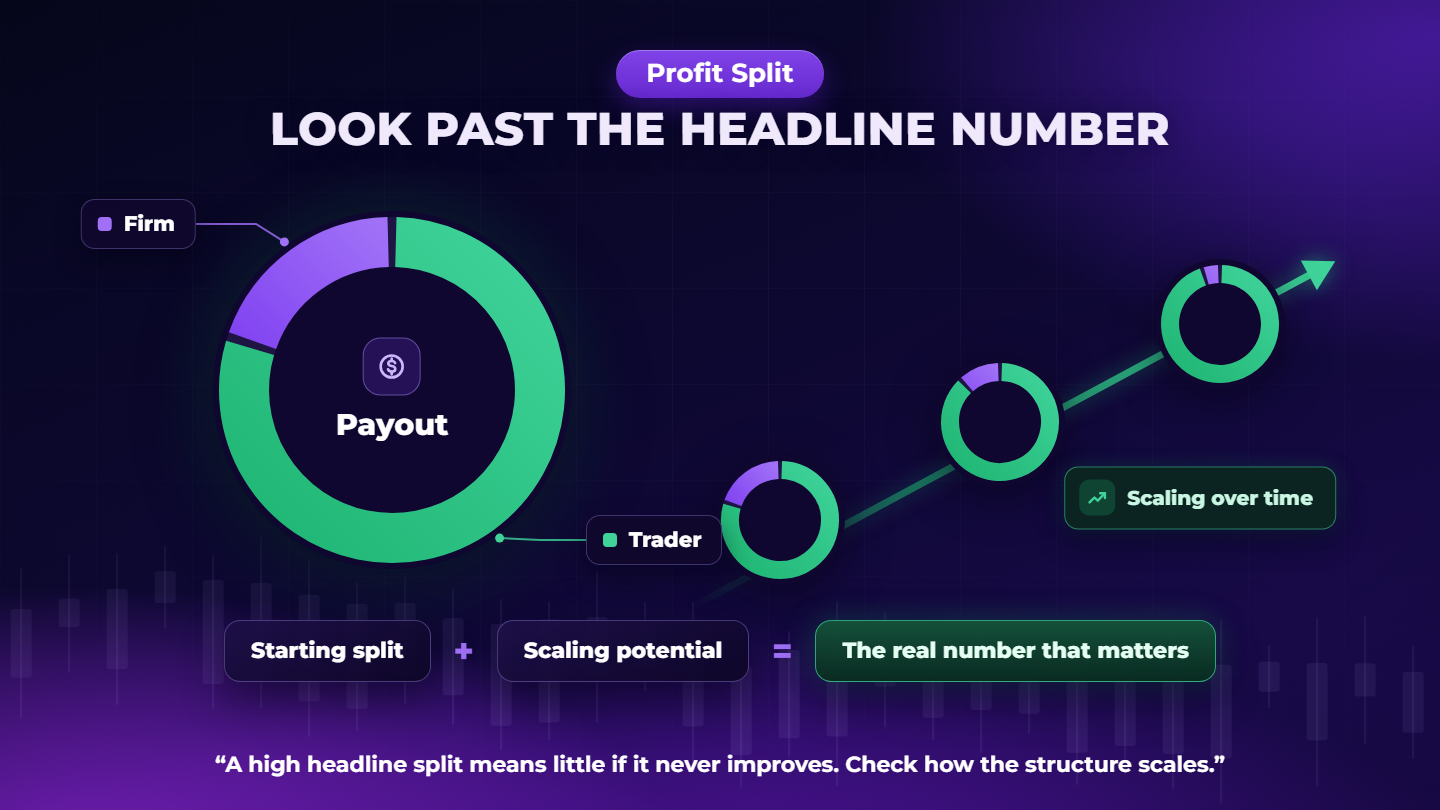
Profit split is usually the first number traders compare, and for good reason: it determines how much of your trade profit you actually keep. But the starting split tells only part of the story. Many futures prop firms design their programs so the split improves as you hit a profit target and build a track record, which means the real value of an offer depends heavily on scaling, not just the headline percentage.
Ask specifically how the firm calculates split increases: is it tied to consecutive profitable months, total profit reached, or account size growth? Firms calculate this differently, and a split that starts modest but scales quickly can end up more valuable than one that starts high and never moves. This is also where it helps to check reviews and discussions; traders on Reddit and prop trading forums often share real numbers from their own funded account experience that marketing pages don't mention.
2. Drawdown Rules and Risk Management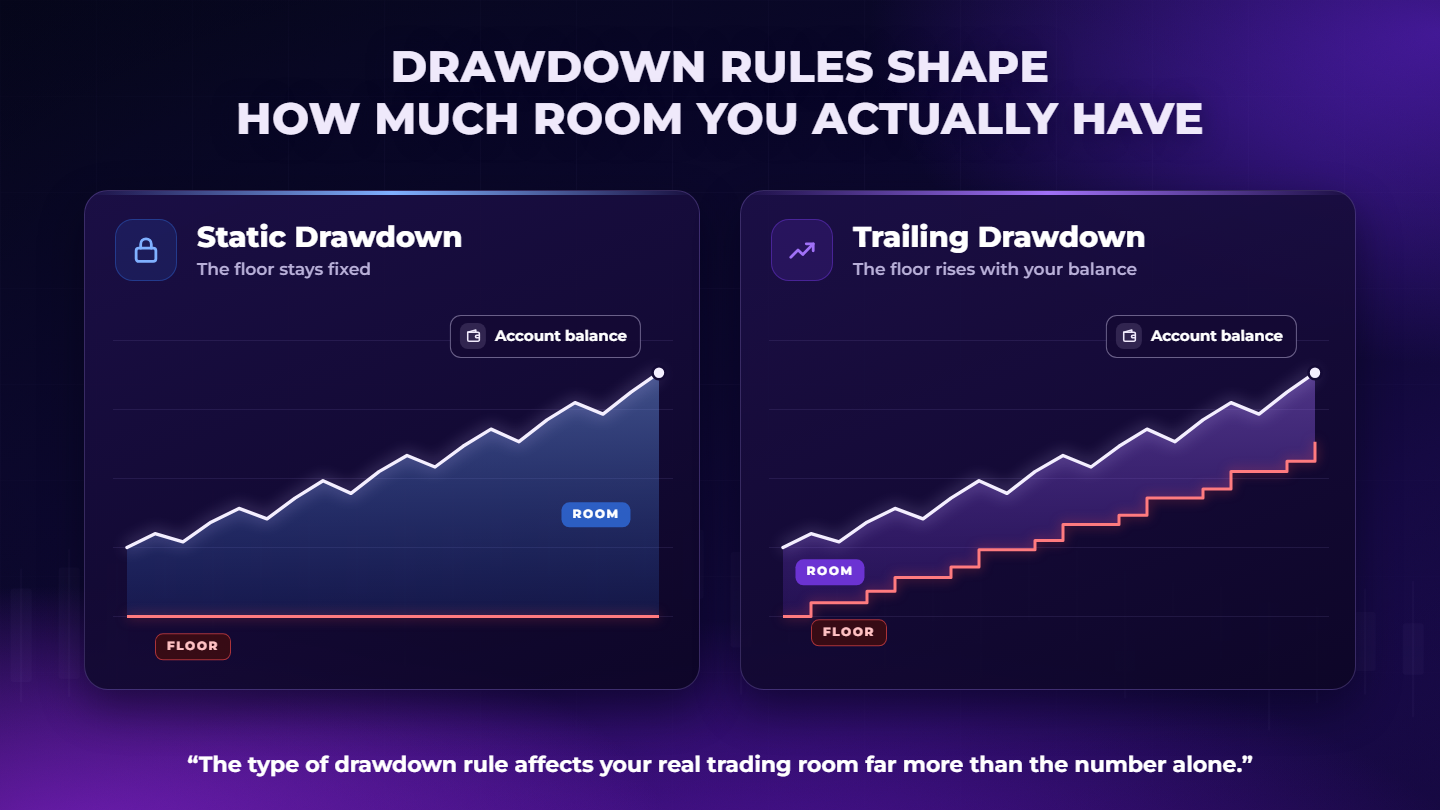
Drawdown is one of the most misunderstood parts of any funded account, and it deserves careful attention before you trade a single position. A drawdown limit that sounds generous on paper can behave very differently depending on whether it's static or trailing. A trailing drawdown floor that rises with your account balance gives you less real room than a fixed one, even if the stated percentage looks similar.
Good risk management starts with understanding exactly how a firm measures drawdown: end-of-day balance, intraday equity, or some blend of the two, because that detail changes how much flexibility you actually have to hold trades overnight or ride out a losing trade. A firm that explains its risk management approach clearly, rather than burying it in fine print, is usually a firm worth trusting with real trading capital.
3. The Evaluation Process and Trading Rules
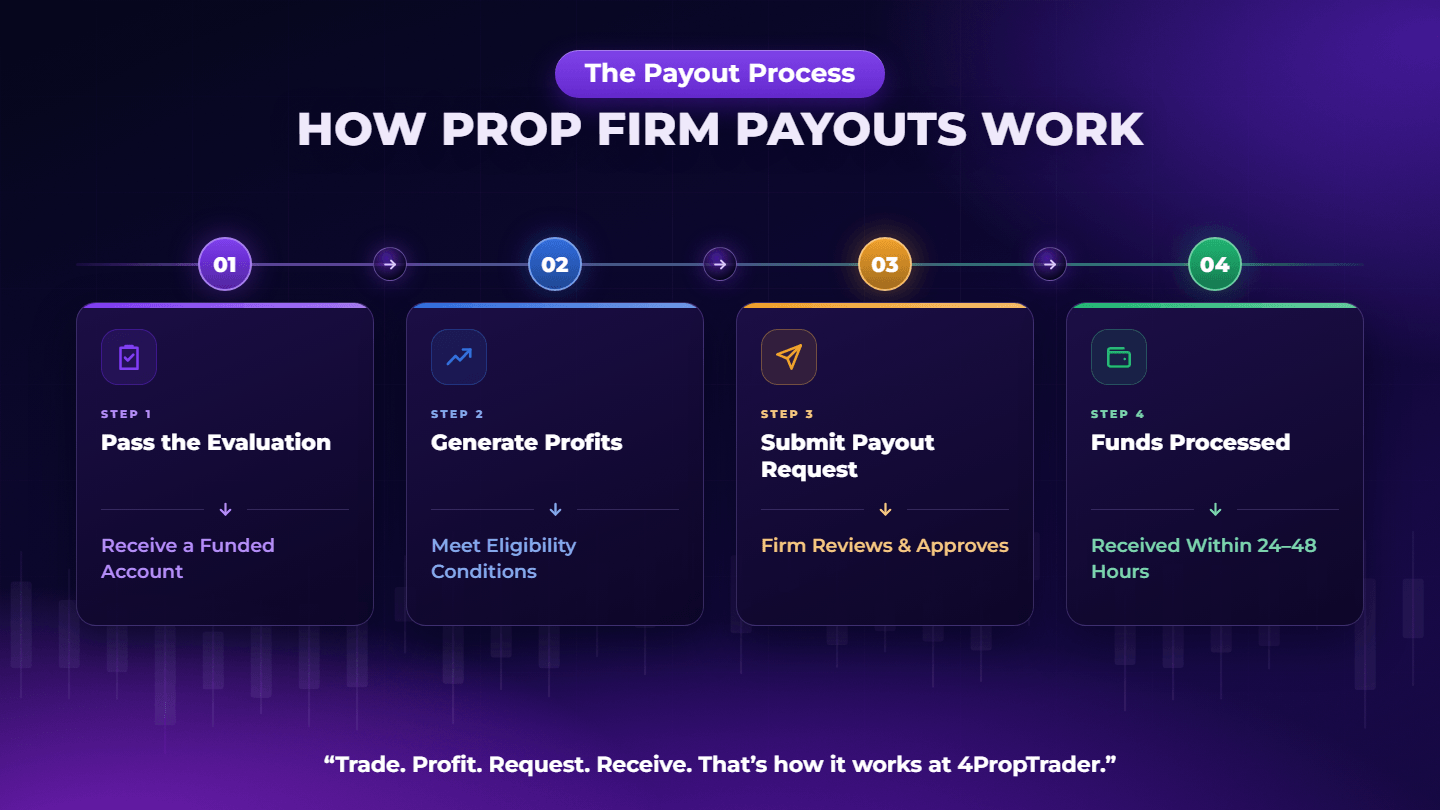
Every futures prop firm structures its evaluation differently, but most share a similar shape: pass a set of profit and risk targets during a simulated trading environment, then move on to a funded or express funded accounts stage. What varies is the detail: minimum trading days required before a payout, whether weekend or overnight positions are restricted, and how strict the trading rules are around news events or specific trade sizes.
Some prop firms offer instant funding paths that skip the evaluation step entirely, which can suit an experienced trader who already has a proven trading style, while others require a full evaluation to confirm trading skill and consistency before funded status is granted. Neither approach is inherently better; it depends on whether you'd rather prove trading skill upfront or place your first trade under real account rules from day one.
It's also worth checking how a firm handles rule violations. A reputable firm typically gives clear, published terms and conditions rather than vague policies that shift after the fact, and a firm that offers transparent trading conditions around daily loss limits, position sizing, and permitted trade types is one that respects a trader's time and trading capital.
4. Payout Speed and Funded Account Terms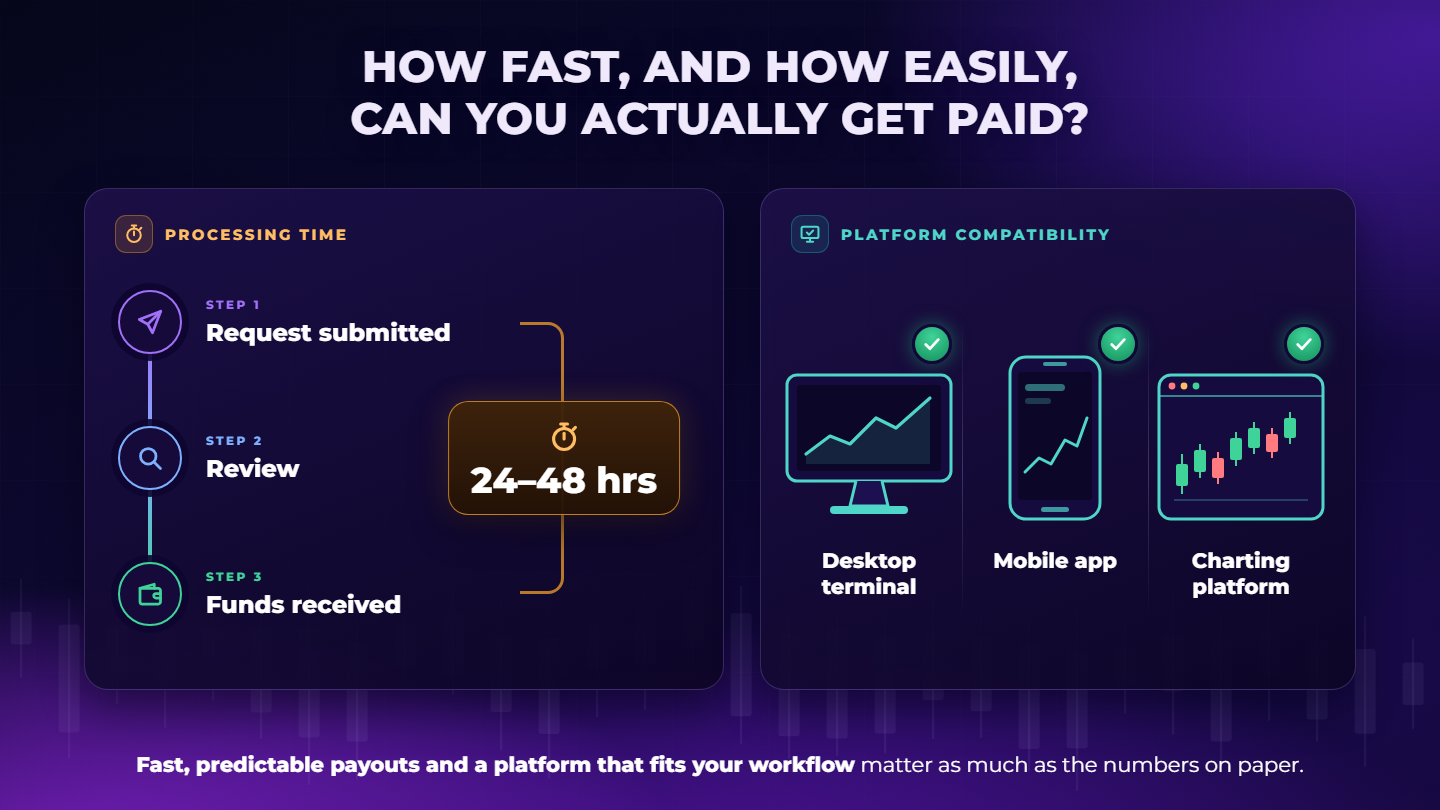
Once you reach funded status, payout speed becomes one of the most practical criteria on this checklist. Some prop firms offer immediate or near-immediate payout requests once you hit a profit target and clear a minimum number of trading days; others process withdrawals on a fixed schedule. Neither is wrong, but a trader planning around consistent income should know which model they're signing up for.
It's also worth asking whether the firm caps payout amounts for early withdrawals, and whether a funded trader can request a payout after their very first profitable trade or must wait through several trading cycles. How long a firm takes to respond to a support ticket about a pending payout also tells you something important about what to expect later.
5. Trading Platform, Data Feed, and Broker Considerations
The trading platform a firm supports directly affects your day-to-day trade experience, especially if you rely on custom indicators, automated strategies, or a specific charting setup. Some firms use MetaTrader 5, others build around proprietary platforms, and a mismatch here can quietly undermine an otherwise solid account. Check whether the firm supports the platform you already trade on, or whether switching would mean relearning your workflow from scratch.
Data feed quality matters just as much as the platform itself; a slow or unreliable data feed can distort entries and exits, especially for a trader running a fast-paced trading style like scalping. Liquidity within the firm's simulated environment should also reasonably reflect real futures markets, since futures contracts move differently than forex pairs or equities, and a mismatch in simulated liquidity can teach bad habits before you ever trade live.
Some traders also diversify their trading across futures, forex, and swing trading approaches, so it's worth confirming a firm's supported instruments match your actual trading strategies rather than a narrow list built around day trading only. A broker relationship behind the scenes, where one exists, should also be transparent; you should be able to find out who is executing your simulated or live trade orders.
6. Reputation and What Other Traders Say
Beyond the official terms, it's worth spending time where real traders talk. Threads on Reddit and trading forums are full of firsthand accounts of payout timelines, support responsiveness, and how firms design their rules in practice rather than on paper. A pattern of consistent complaints about the same issue slow payouts, sudden rule changes, unresponsive support is worth taking seriously, even from a firm with polished marketing. Some firms like to advertise fast approvals without detailing what happens after; always read past the headline claim.
Access to trading capital is the whole point of a funded account, so a reputable firm should make it straightforward to understand what real prop trading actually looks like day to day, not just during a promotional sign-up period. A real trader considering multiple futures prop firms: fund different account sizes differently, so comparing offers side by side against your own trading strategies, rather than against marketing copy, is the most reliable way to choose the best fit.
7. Matching the Firm to What Futures Trading Actually Demands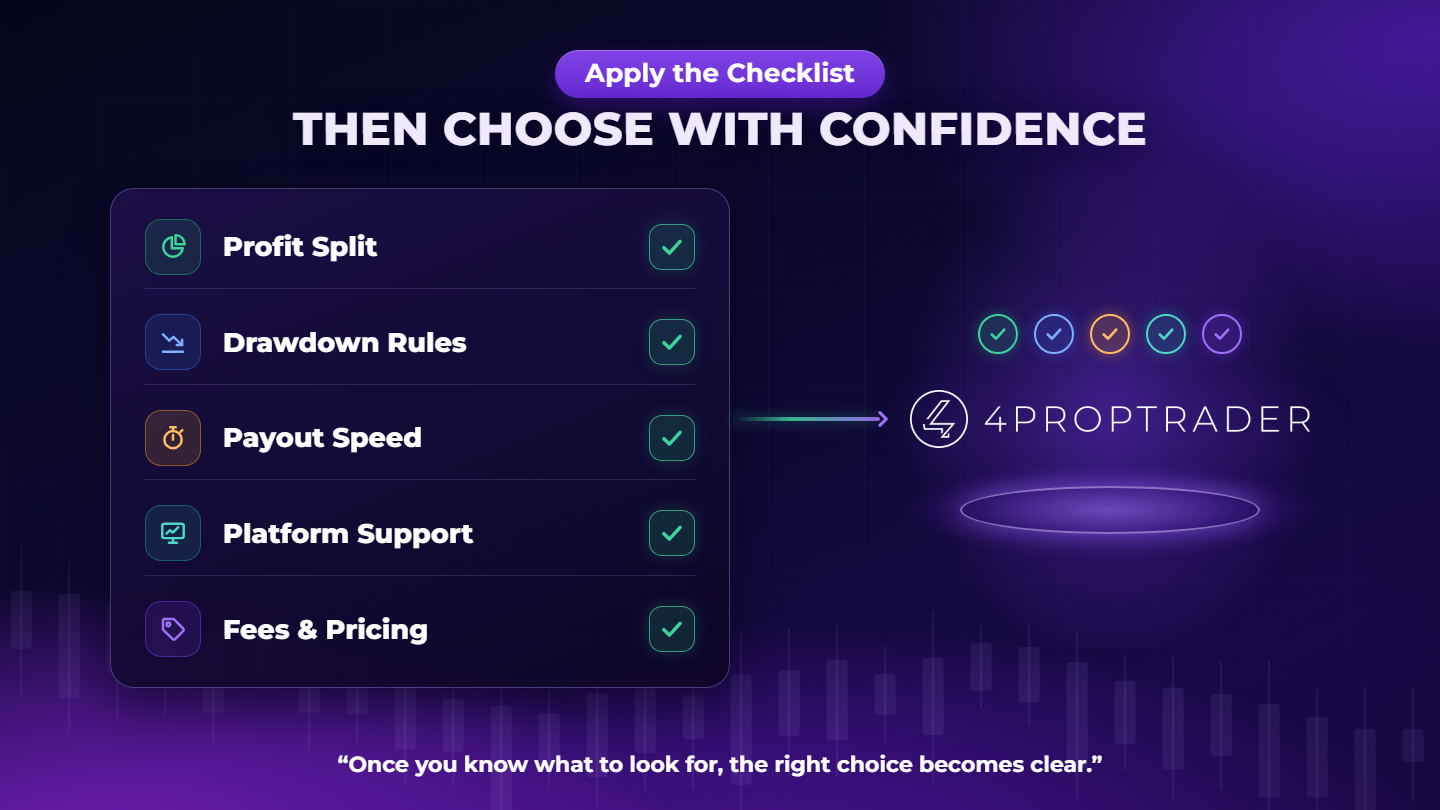
Futures trading demands discipline that a firm's rules either support or work against. A futures day can move fast, and a firm whose rules assume slower, lower-leverage conditions may not fit a trader whose entire trading strategy depends on speed and precision. Before you apply, walk through a typical futures day in your own trade routine and check it against the firm's evaluation and funded rules line by line: position limits, permitted instruments, and whether scalping or high-frequency trade entries are restricted.
A prop firm based in one country may operate under different regulatory expectations than one based elsewhere, which can affect support hours, payout currency, and available account sizes. At its core, a proprietary trading firm provides trading capital in exchange for a share of profits, and understanding this proprietary trading relationship helps explain why rules like drawdown limits and consistency requirements exist in the first place.
There's no single best futures prop firm for everyone, just as there's no universal list of the best prop firms that replaces doing your own homework. It's worth remembering that firms aren’t interchangeable just because their offers look alike on a landing page, and for prop traders comparing multiple options, this checklist format keeps the decision grounded in criteria rather than promotional claims.
A firm may also adjust its rules over time, so it's worth checking for update notices rather than assuming today's terms and conditions will stay fixed forever. Many firms now offer more account size tiers and flexible scaling paths than they did even a year ago, giving traders more ways to match a program to their trading strategies. The broader funded futures space has matured quickly, and once you've compared profit split, drawdown, payout speed, platform, and fees side by side, traders can choose with confidence rather than guesswork.
Frequently Asked Questions
What's the most important factor when choosing a futures prop firm?
There's no single most important factor; profit split, drawdown rules, payout speed, and trading platform support all matter together. A trader focused purely on profit split while ignoring drawdown limits and payout speed frequently ends up disappointed even after passing an evaluation.
How long does a typical evaluation take?
It varies by firm and by how quickly a trader hits the required profit target and minimum trading days. Some evaluations can be completed in days if the trading conditions and the trader's pace align; others take weeks.
Should I choose a firm with instant funding or a full evaluation?
It depends on your trading skill, experience, and comfort with risk. Instant funding paths get you trading real account rules faster, but typically come with tighter risk parameters, while a full evaluation lets a trader prove consistency before funded status is granted.
Is a lower profit split always a worse deal?
Not necessarily. A firm that offers a lower starting split but scales quickly, combined with fast payout processing and reasonable drawdown rules, can be a better long-term deal than a firm with a high headline split and slow payouts or a restrictive drawdown limit.
Where can I find honest reviews of prop firms?
Reddit threads, independent trading forums, and firsthand accounts from funded traders are usually more reliable than a firm's own marketing page. Look for patterns across many prop reviews rather than a single glowing or negative post.
Final Thoughts
Choosing a futures prop firm doesn't have to be complicated once you know what to check. Profit split and scaling, drawdown rules, evaluation structure, payout speed, trading platform support, and reputation among real traders- these six factors cover almost everything that separates a firm worth your time from one that isn't.
There's no best futures prop firm that fits everyone, and there's no universal ranking of the best prop firms that replaces doing your own homework. What matters is matching the criteria in this guide against your own trading style, account size needs, and trading strategies, then applying to the firm that checks every box, rather than the one with the loudest advertising.
Once you've worked through the checklist- profit split, drawdown, evaluation, payout, platform, and reputation 4PropTrader is built to hold up well against every one of these criteria for futures traders. Apply the checklist first, then see how the comparison looks for yourself.
Disclaimer: Trading futures involves substantial risk of loss and is not suitable for every investor. Profit split percentages, drawdown rules, payout timelines, and other terms vary by firm and are subject to change — always confirm current terms directly with any prop firm before applying or funding an evaluation.
See how 4PropTrader measures up on the factors that matter — apply for your funded account today