Quick Summary
What is a funded trading account? A funded trading account is an account provided by a proprietary trading firm or prop firm that allows a trader to trade with a funded account using the firm’s capital instead of their own personal capital. In this model of funded trading, the trading firm provides the capital to trade, while the funded trader uses their trading skill to participate in financial markets.
Most prop trading firms offer a funded trading program where traders must first complete an evaluation phase or pass an evaluation to demonstrate responsible risk management, consistent trading performance, and the ability to operate within defined risk limits and drawdown rules.
Once approved, the funded account allows traders to trade larger trading capital than they could typically access when using your own capital. In return, the trader may share profits with the prop trading firm, creating a performance-based structure designed to support sustainable trading.
This guide explains how funded trading accounts work, how traders get access to firm’s capital to trade, how accounts operate within modern prop trading models, and the key benefits of funded trading accounts for traders looking to build a sustainable trading career.
Introduction
Retail trading has one major limitation: capital.
Many traders develop strong trading strategies and solid trading practices, but their growth is often restricted by the amount of personal capital they have available. Even when a trader has the trading skill to perform well in different market conditions, scaling a personal trading account can take years.
This is where funded trading changes the landscape.
Instead of relying solely on using your own capital, many prop trading firms now offer structured funded trading programs that allow skilled traders to trade without committing large amounts of personal money. Through these programs, a proprietary trading firm provides capital to trade, allowing traders to access significantly larger trading capital.
When a trader is accepted into a funded trading account, they gain access to a funded account where they can trade with a funded account using the firm’s capital. If the trading performance is profitable and the trader must follow the firm’s trading rules, the trader may share profits with the trading firm.
However, funded trading accounts explained simply are only part of the picture.
To fully understand what a funded trading account is, it’s important to explore how these accounts work, how prop firm trading structures operate, and how prop trading firms provide access to trading opportunities for disciplined traders.
In the sections ahead, we will break down:
- how funded trading accounts work
- how traders get funded
- how funded account evaluations and the evaluation phase function
- how risk management, drawdown, and risk limits protect the firm’s capital
- and how funded trading can create real trading opportunities for traders aiming to build a sustainable trading career
What Is a Funded Trading Account?
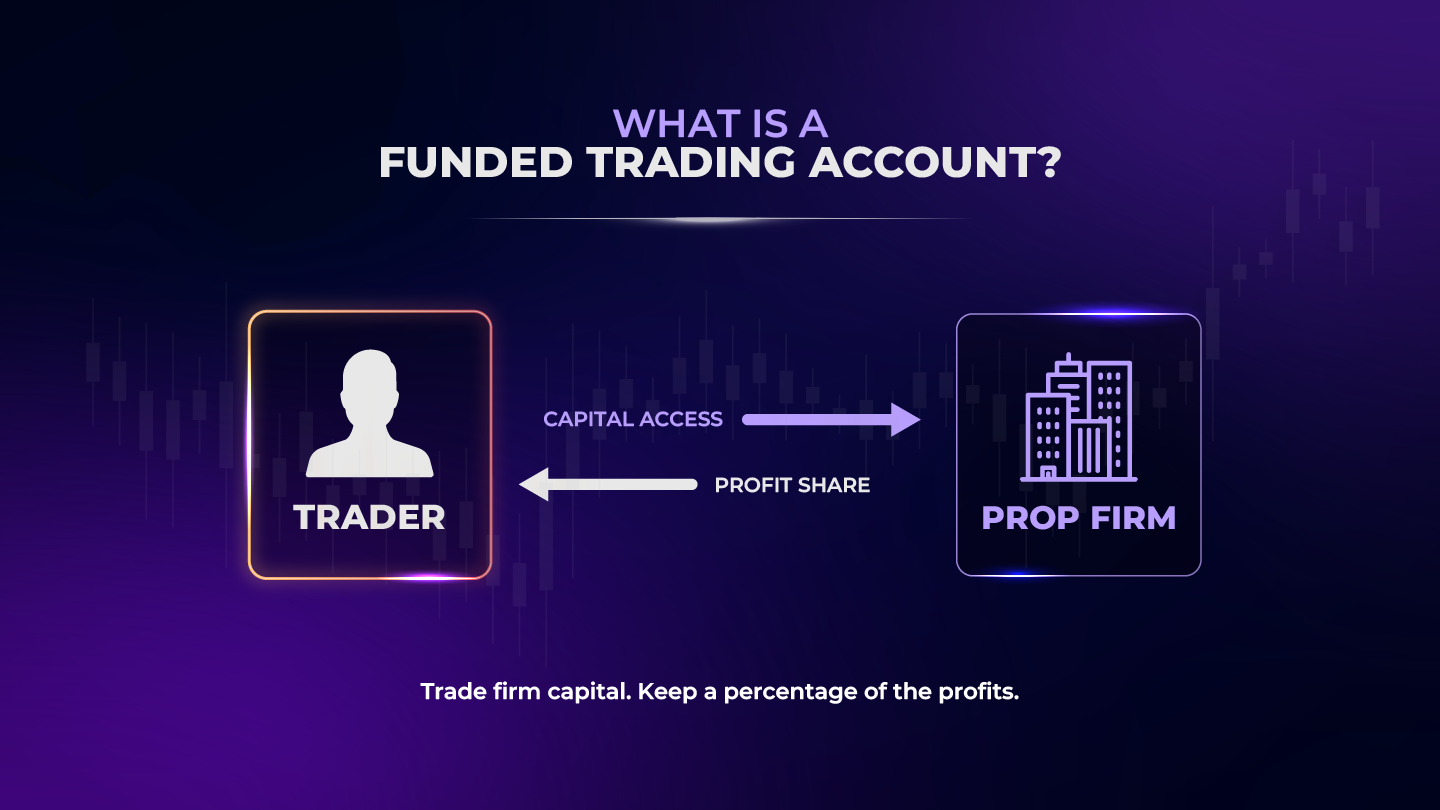
A funded trading account is a trading account provided by proprietary trading firms that allows a trader to trade using the firm’s funded capital instead of relying solely on personal capital.
In simple terms, a funded trading account involves a partnership between a prop firm and a trader. The prop trading firm provides the capital to trade, while the trader contributes their trading skill, discipline, and ability to make sound trading decisions in changing market conditions.
This account type is designed to help traders access larger trading capital without risking their own savings. Instead of opening a traditional brokerage account and trading only with personal funds, a trader can get a funded trading account through a structured funded trading program.
Once approved, the account allows traders to start trading with the firm’s capital to trade, giving them access to trading opportunities that would otherwise require significant personal investment.
Most prop trading firms structure these programs so the funded trader can share profits with the firm. In this model:
- The prop firm trading infrastructure supplies the trading platforms and trading tools needed to operate.
- The funded trader focuses on making disciplined trading decisions.
- Both parties benefit from consistent trading results.
This structure is why funded trading accounts explained often emphasize that the goal is not simply giving traders capital. Instead, accounts allow traders to demonstrate consistent performance while operating under professional trading conditions designed to manage financial risk.
For many aspiring traders, this advantage of trading through a funded account is significant. It creates the opportunity to trade without committing large amounts of personal money while still participating in real market environments.
How Funded Trading Accounts Work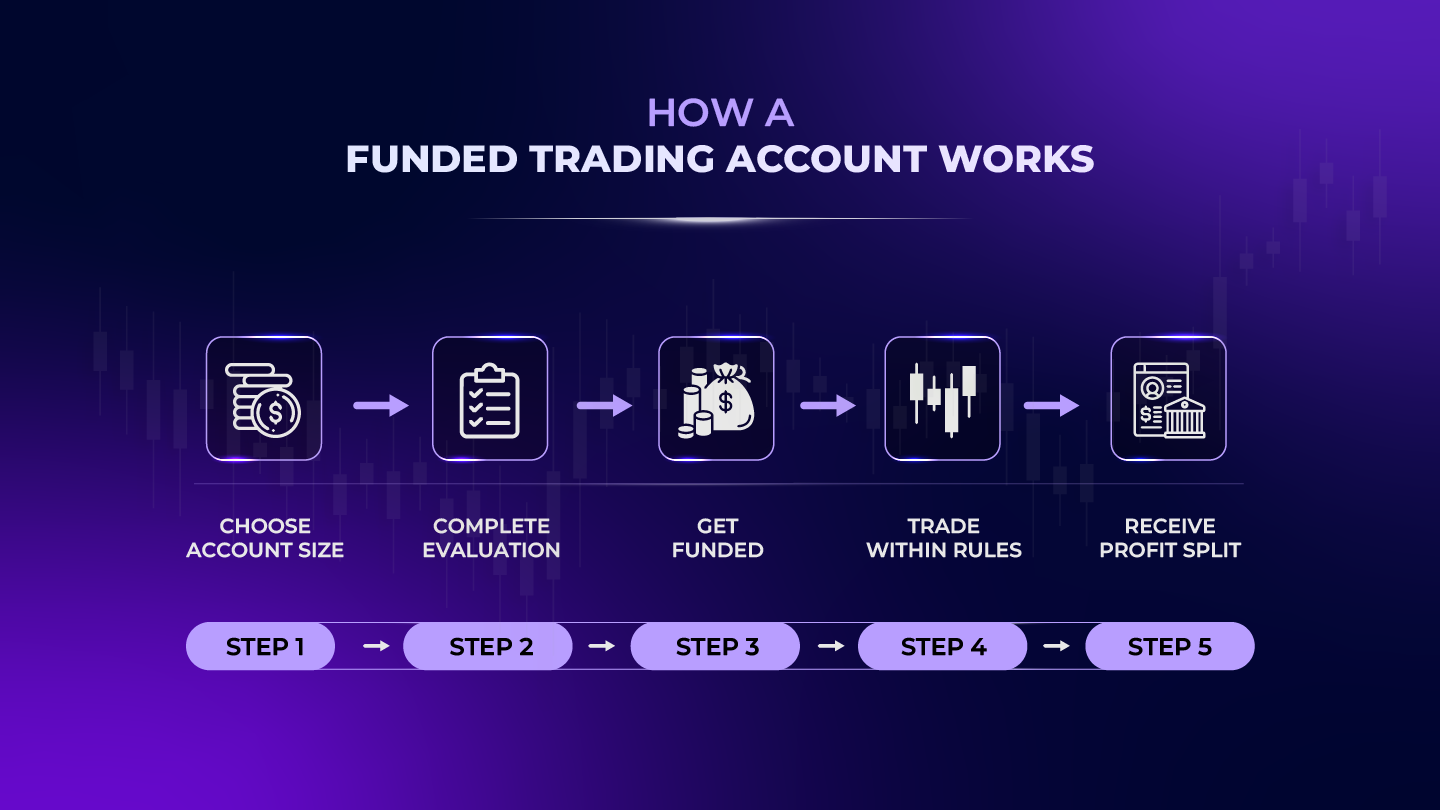
To understand how funded trading accounts work, it’s important to look at the structure behind modern prop firm trading models. Most funded trading programs are designed to help traders access larger trading capital while maintaining strict controls around financial risk and trading performance.
Typically, these programs are provided by proprietary trading firms and operate through a structured process that evaluates a trader’s discipline, trading decisions, and ability to perform consistently under defined trading conditions.
Unlike opening a traditional brokerage account where traders rely only on their own funds, a funded trading account involves gaining access to funded capital through a professional trading program that allows traders to focus on improving their trading results.
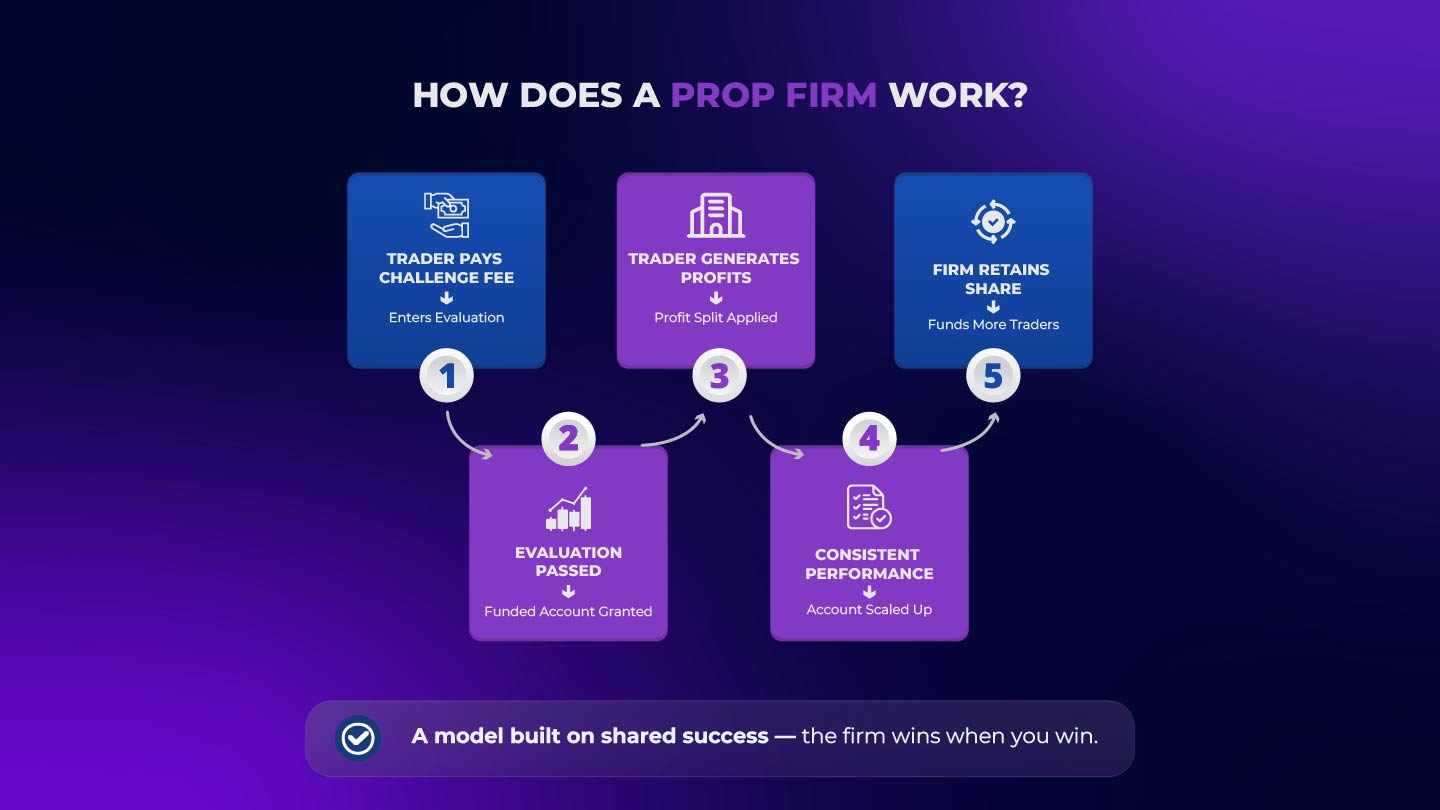
Most prop trading firms structure their programs in three main stages:
- The proprietary trading firm
- The evaluation or challenge
- The capital allocation stage where traders receive a funded account
These stages are designed to ensure that traders demonstrate responsible risk management, maintain control over drawdown, and show the ability to make disciplined trading decisions across different market conditions.
Once approved, accounts allow traders to start trading immediately with larger trading capital using professional trading platforms and advanced trading tools supplied by the prop firm. This structure creates an environment where traders can focus on consistent performance while the trading firm manages the broader financial risk.
Because these programs are designed to support multiple different trading styles, they often provide flexible account types, scalable account size options, and clear trading rules that guide how traders can operate within the system.
Ultimately, funded trading accounts explained simply come down to this: they are structured opportunities that allowing traders to access significant capital without risking large amounts of personal capital, while operating within professional trading conditions designed to promote long-term sustainable trading.
1. The Proprietary Trading Firm
A proprietary trading firm—often referred to as a prop firm—is a company that offers funded trading opportunities by providing funded capital to skilled traders. These firms are designed to help traders participate in financial markets without needing large amounts of personal capital.
Instead of requiring traders to rely solely on opening an account with their own funds, prop firms create structured programs where traders can get a funded trading account after demonstrating strong trading skill, discipline, and consistent trading results.
Many modern prop firms trading environments support multiple markets including forex, futures, and other asset classes. Through advanced trading platforms and professional trading tools, traders can focus on trading strategies while the firm manages broader financial risk.
These firms typically operate funded trading programs designed to identify traders capable of performing under real market conditions. The goal is to become a funded trader who can generate consistent profits while respecting strict risk management rules.
Most trading accounts offer access to:
- professional trading platforms
- advanced trading tools
- scalable account size options
- structured trading conditions
In many cases, these firms also simulate trading environments during the evaluation process. Traders operate in a simulated account first, allowing the firm to assess their discipline, risk control, and ability to reach a defined profit target before receiving a live funded account backed by the firm's capital structure.
Once traders demonstrate consistent performance, they may gain access to funded capital that allows them to begin trading larger positions and potentially start trading immediately within the firm’s professional infrastructure.
Ultimately, accounts explained within the prop trading industry are built around a simple idea: firms offer funded capital to traders who can demonstrate the ability to manage financial risk, maintain discipline during every trading day, and generate sustainable trading results.
2. The Evaluation Phase
Before traders receive funded capital, most prop trading firms require them to complete an evaluation or challenge. This stage allows the firm to assess whether a trader has the discipline and trading skill required to manage capital responsibly.
During the evaluation, traders typically operate in a simulated account environment that helps simulate real market conditions while protecting the firm from unnecessary financial risk. The objective is to demonstrate consistent trading results, respect risk management rules, and reach the required profit target.
Traders must also follow structured rules such as maintaining discipline during each trading day and completing the required minimum trading days.
Once successfully completed, traders may get a funded trading account, begin trading, and move closer to live trading conditions as they progress toward becoming a funded trader.
3. Capital Allocation
After successfully completing the evaluation, traders receive access to funded capital through a funded trading account. At this stage, the prop trading firm allocates a specific account size, allowing traders to begin operating with the firm’s capital rather than relying entirely on their own funds.
The accounts come as may be:
- $25,000
- $50,000
- $100,000
- $200,000 or more
This allocation allows traders to participate in the markets with capital without needing to commit large amounts of personal money. In many cases, accounts come in different sizes depending on the specific trading program offered by the firm.
Once the account is activated, traders gain the trading right to operate within the firm’s rules and risk parameters. While the capital itself remains owned by the firm, the trader can begin executing trades in environments that closely resemble trading real money conditions.
Depending on the firm, these accounts may support markets such as forex trading, futures, and other financial instruments. This allows traders to get a funded account and develop their trading career while focusing on consistent performance rather than the limitations of personal capital.
For many traders, this stage represents one of the major benefits of funded trading accounts—the ability to participate in professional markets and live trading environments without needing to build large trading capital independently.
How Profit Splits Work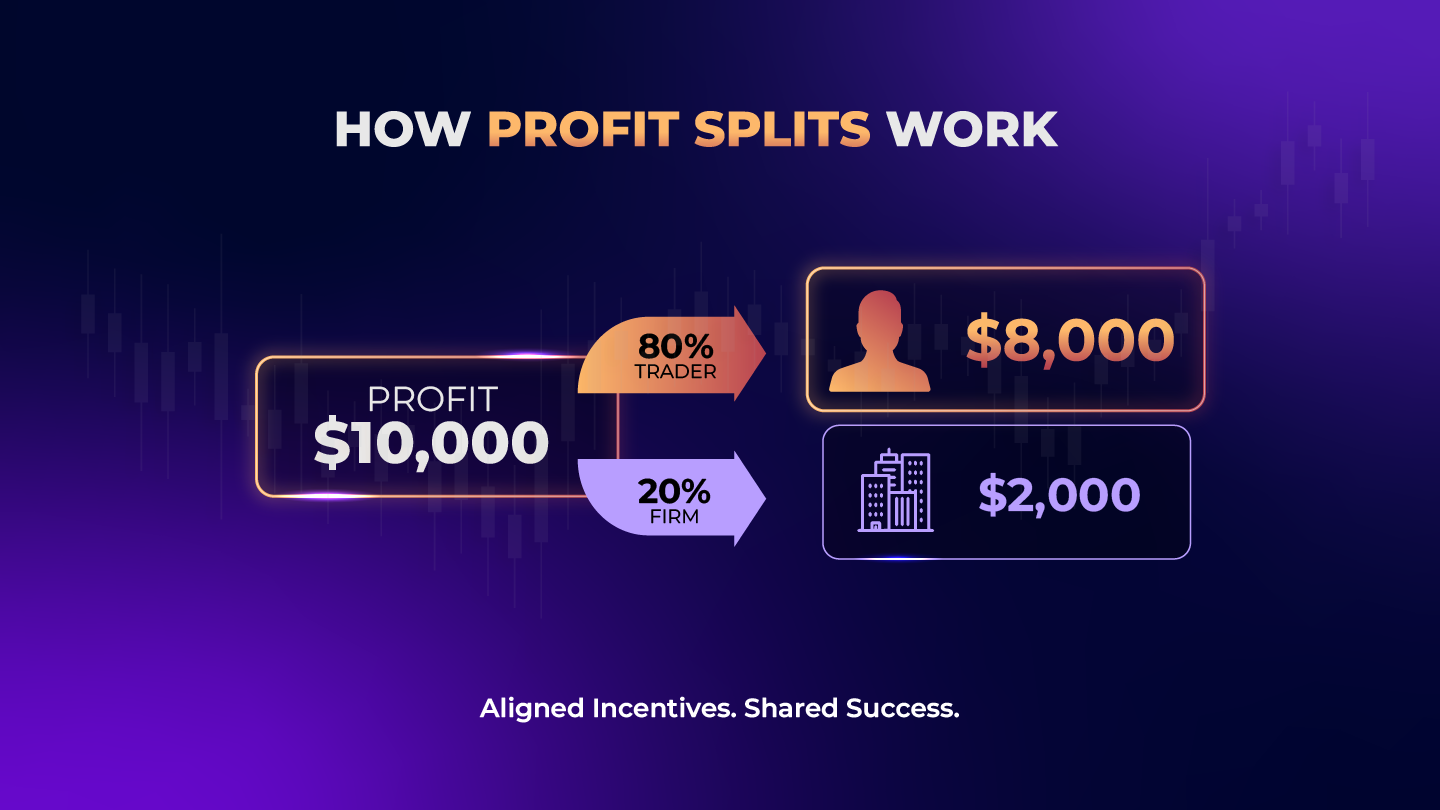
One of the most attractive aspects of funded trading is that the trading offers the profit split.
For example, a trader may receive a $100,000 funded account with a maximum drawdown of $5,000 and an 80/20 profit split.
If the trader generates $10,000 in profit while staying within the firm’s risk limits:
- The trader receives $8,000
- The prop firm receives $2,000
The trader never owns the capital itself but has the right to trade it as long as they follow the firm’s rules.
What Is a Profit Split?
A profit split determines how gains are divided between the trader and the firm.
Common models include:
- 70/30
- 80/20
- 90/10
If a trader earns $10,000 in profit under an 80/20 split:
- Trader receives $8,000
- Firm keeps $2,000
This creates aligned incentives:
- The trader earns more by performing well.
- The firm earns by backing disciplined traders
Payout Structures
Funded trading accounts typically offer structured payout schedules.
Common payout models:
- Bi-weekly payouts
- Monthly payouts
- On-demand payouts after minimum profit threshold
Some firms also implement:
- Minimum trading days before payout
- Profit consistency requirements
Understanding payout mechanics is essential before selecting a firm.
Risk Rules in a Funded Trading Account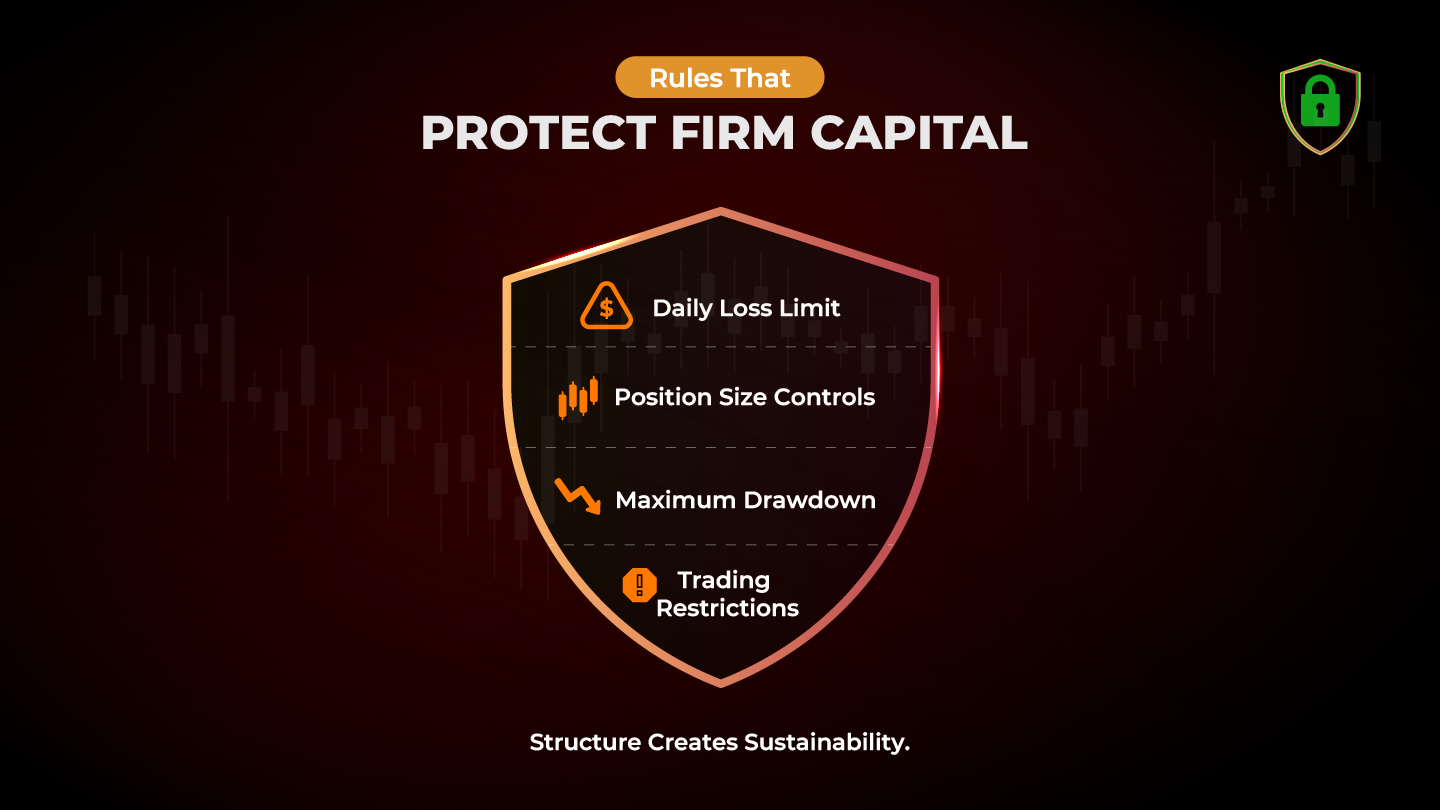
Even after receiving funding, strict rules continue to apply.
Funded accounts are not “free capital.” They are structured environments.
Common post-funding rules include:
- Daily loss limits
- Maximum overall drawdown
- Position size limits
- Trading restrictions around news
- Consistency expectations
The goal is to protect firm capital while allowing traders room to perform.
Is the Capital Real?
This is a common question when discussing what is a funded trading account.
In most modern prop models:
- Traders operate in simulated environments
- The firm manages aggregated risk exposure
- Payouts are funded by firm revenue structures
Some firms hedge trader positions in real markets, while others manage internal risk pools.
Regardless of structure, what matters to the trader is:
- Transparent rules
- Reliable payouts
- Clear risk parameter
Scaling Opportunities
Many funded trading accounts offer scaling plans.
If a trader performs consistently, the firm may:
- Increase account size
- Raise profit split
- Provide additional capital
For example:
- Start with $100,000
- Scale to $200,000 after consistent performance
- Eventually manage $500,000+
Scaling is where funded trading becomes powerful.
Advantages of a Funded Trading Account
1. Access to Larger Capital
Traders can control significantly more capital than their personal savings allow.
2. Limited Personal Risk
The trader risks evaluation fees and time — not the full trading capital.
3. Structured Risk Management
Firm rules enforce discipline, which improves long-term consistency.
4. Psychological Benefits
Knowing you are trading structured capital can encourage professionalism.
5. Performance-Based Growth
Scaling models reward consistent traders.
Challenges of Funded Trading
Funded trading is not easy.
Common challenges include:
- Psychological pressure
- Strict rule compliance
- Drawdown management
- Payout discipline
- Emotional control
Many traders fail not because of strategy issues, but because of discipline lapses.
How Traders Get Access to Capital
To access a funded trading account, traders typically:
- Choose a prop firm
- Select an account size
- Complete the evaluation phase
- Sign a trader agreement
- Begin trading under funding terms
The agreement outlines:
- Profit split
- Rule framework
- Withdrawal structure
- Risk limits
Transparency here is critical.
Who Should Consider a Funded Trading Account?
Funded trading is ideal for:
- Traders with limited capital
- Disciplined traders with rule-based strategies
- Traders comfortable with structured environments
- Those seeking scalable opportunity
It may not be suitable for:
- Impulsive traders
- High-risk scalpers without risk control
- Traders unwilling to follow strict rule
Key Differences Between Personal and Funded Accounts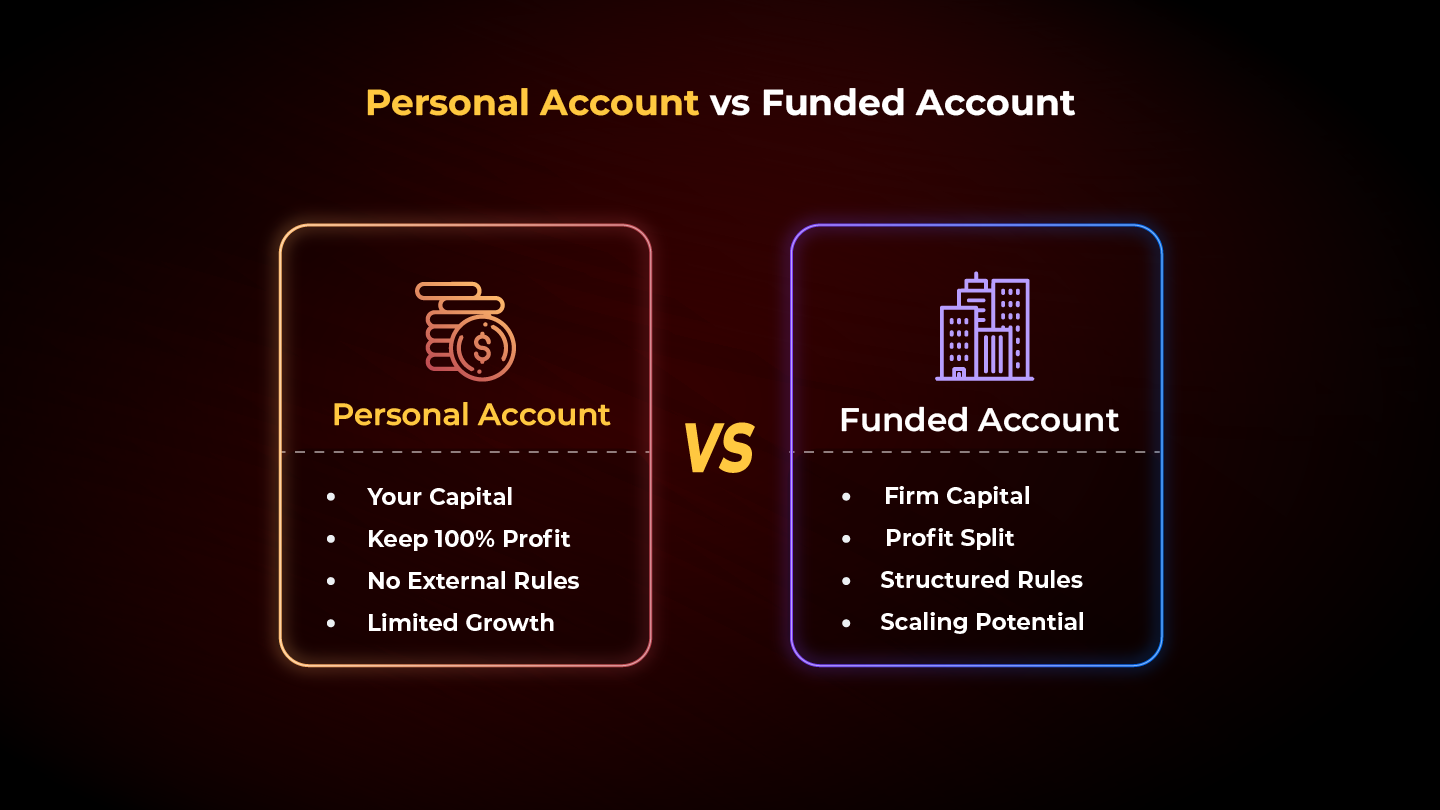
|
|
|
|
|
|
|
|
|
|
|
|
|
|
|
|
|
|
Funded accounts trade freedom for opportunity.
The Business Model Behind Funded Trading
Understanding the business model helps answer what is a funded trading account more clearly.
Prop firms operate on:
- Evaluation fees
- Trader consistency
- Risk diversification
- Profit splits
- Scaling retention
Not all traders pass. Not all traders stay funded.
The firms depend on identifying a smaller percentage of disciplined, consistent traders.
What Happens If You Violate Rules?
If a trader breaches a rule:
- The funded account may be terminated
- The account resets (in some models)
- The trader may need to retake evaluation
Rule adherence is non-negotiable.
This reinforces why risk management and psychology matter more than aggressive profit chasing.
Funded Trading as a Career Path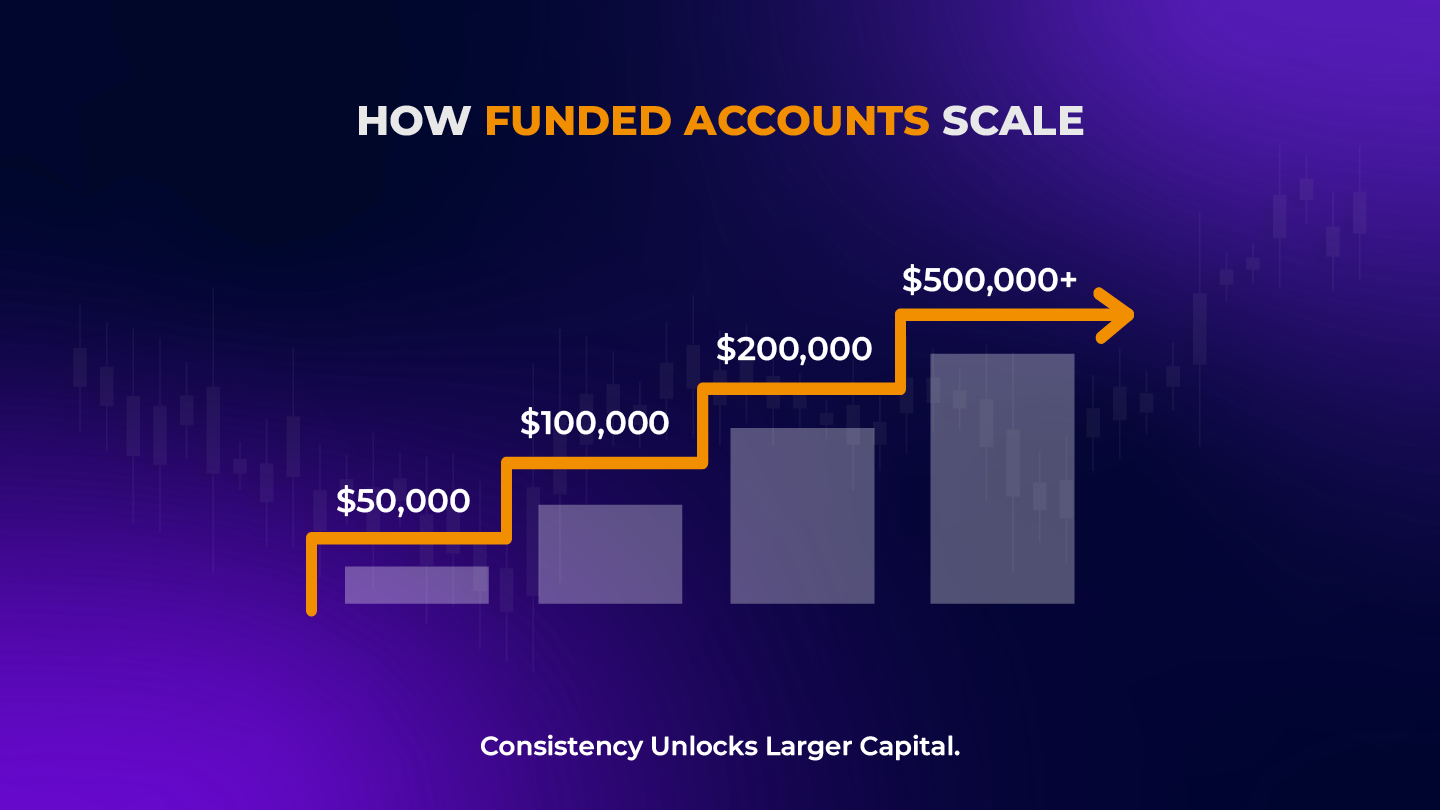
For some traders, funded trading becomes a stepping stone.
Successful funded traders may:
- Build consistent payout income
- Transition into managing larger capital pools
- Use profits to build personal accounts
- Develop long-term professional trading careers
However, sustainability depends entirely on discipline.
Frequently Asked Questions (FAQs)
What is a funded trading account in simple terms?
It’s an account provided by a prop firm that allows you to trade the firm’s capital and keep a percentage of the profits.
Do traders own the capital?
No. The firm owns the capital. Traders are allocated access under specific rules.
How do traders get paid?
Through profit splits based on net gains generated within rule parameters.
Can you lose personal money in a funded account?
You typically do not lose trading capital, but evaluation fees and time are at risk.
Are funded trading accounts legitimate?
Yes, when operated by transparent, reputable firms with clear payout structures.
Final Thoughts
Understanding what is a funded trading account is about more than defining the term. It’s about understanding the structure behind modern proprietary trading.
Funded trading is a partnership:
- The firm provides capital.
- The trader provides skill and discipline.
The opportunity is real — but so are the rules.
If approached professionally, a funded trading account can:
- Unlock scalable capital
- Enforce disciplined habits
- Provide structured growth
- Create performance-based income
But success depends on consistency, not aggression.
Ready to trade with real capital instead of risking your own money? Apply for a funded Futures or CFD account at 4PropTrader and start your evaluation today.