Quick Summary
Whether you can trade major data releases depends entirely on the firm you choose. Some firms block entries around scheduled releases, while 4PropTrader has no restrictions on trading releases in either phase.
This guide covers the release calendar, the events that move prices most (NFP, CPI, and FOMC), what happens to fills and quotes around a release, and how to manage the risk. It stays on news-related rules and does not repeat our complete guide to the challenge rules.
Introduction
News releases are the moments when a quiet chart turns fast. For traders working toward funding, a simple question comes before the first order: is trading the release permitted at all? The answer changes from firm to firm, and a rule you miss can cost you the whole attempt.
This article focuses only on news-related rules and the release calendar. It explains what many firms restrict, which events matter, what happens in the market around a release, and how we handle it. For the wider rulebook, read our complete guide to the challenge rules.
What Do Firms Usually Permit?
Across the industry, the picture is mixed. Many prop firms allow trading through releases, while others set restriction windows around scheduled events. A typical restriction blocks new entries, or forces positions to close, for a set number of minutes before and after a release. Some firms also void any profit made inside the window.
The restricted part is usually the stretch immediately around the release, not the whole trading day. The reasoning is that fills become unpredictable at that moment, and firms want to avoid results that come from luck rather than skill.
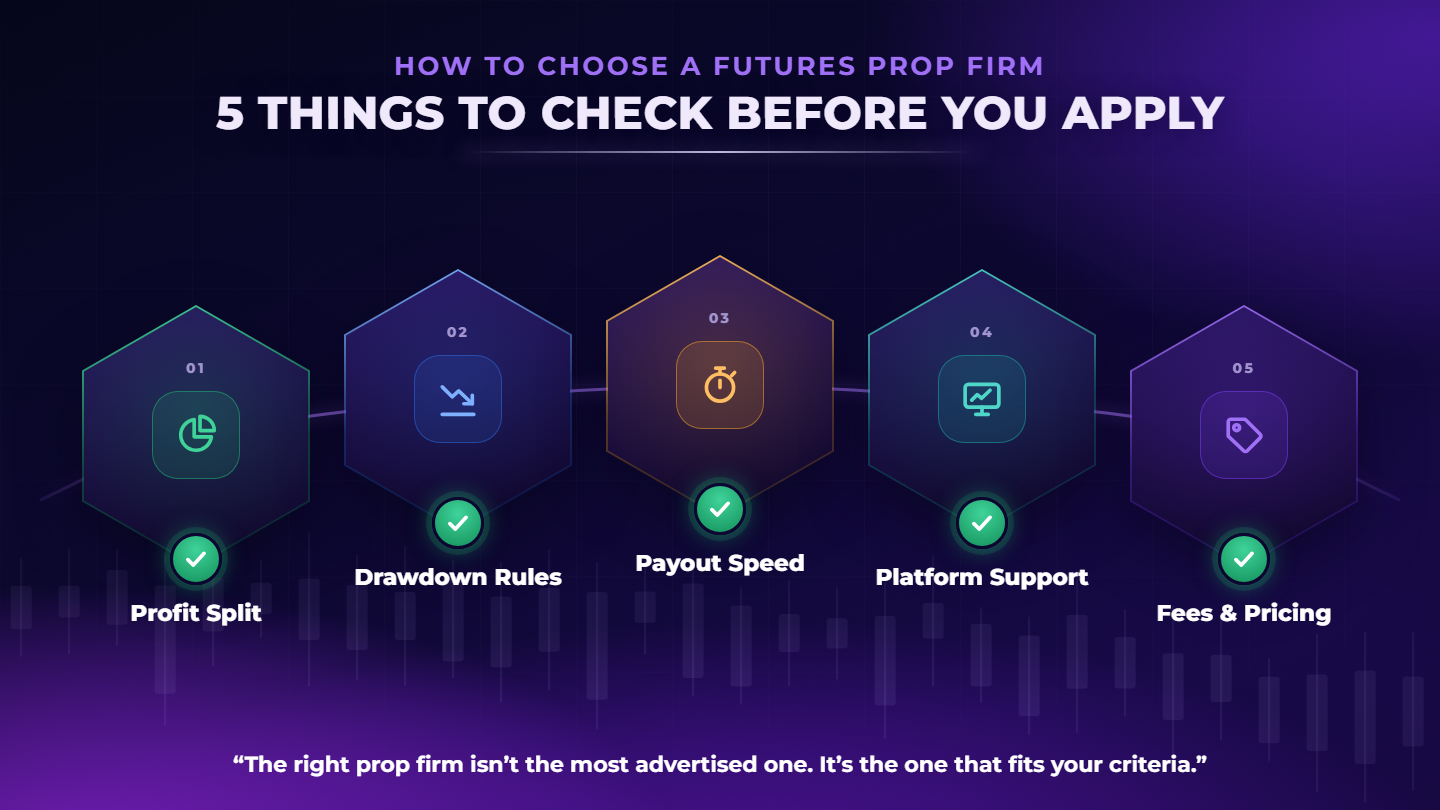
If you are searching for prop firms that allow news trading, the useful question is not only yes or no. Check whether the permission covers both phases of the account, whether it applies to Futures and CFD products alike, and whether the policy is written down clearly rather than implied.
Reading the Release Calendar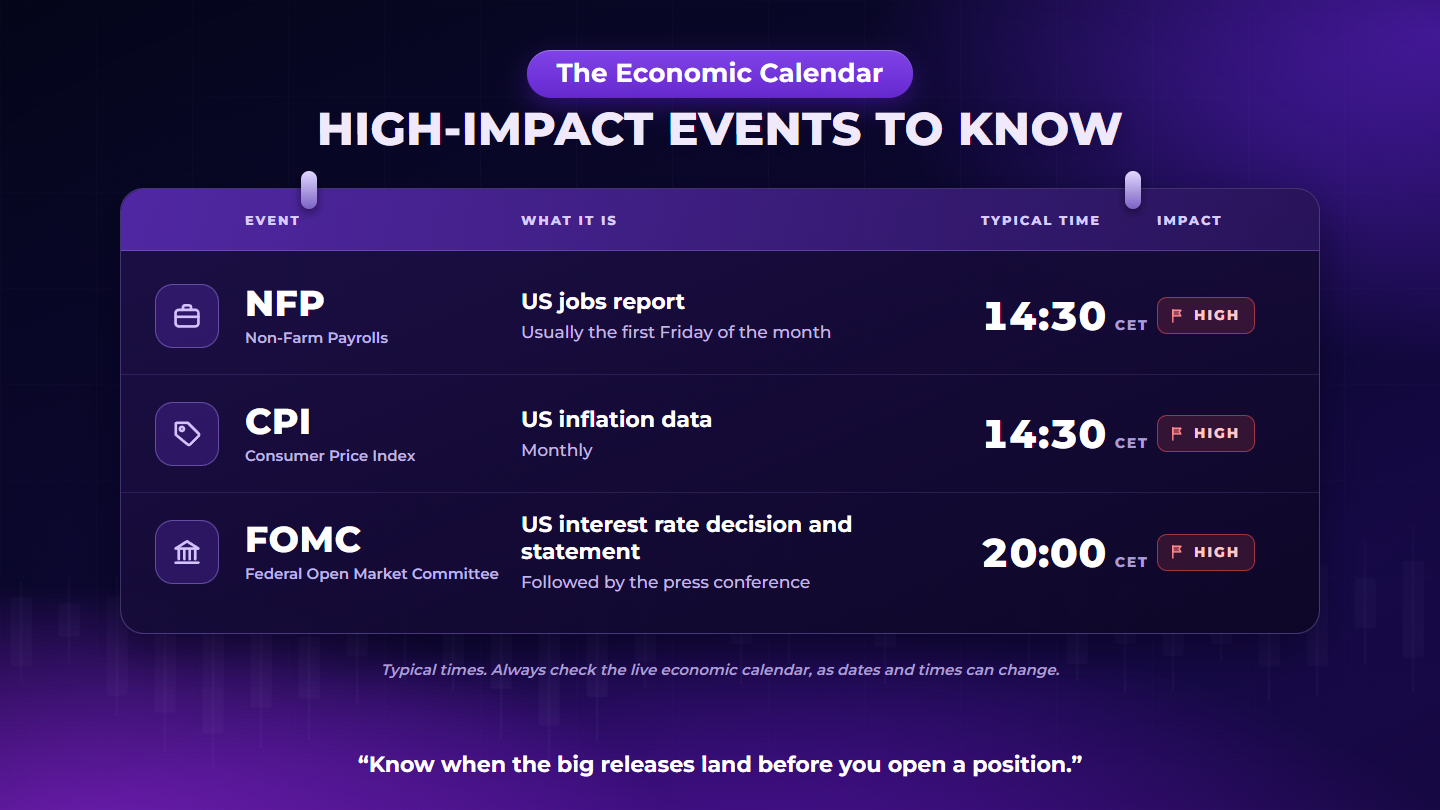
The economic calendar lists scheduled data releases with an impact rating, so you can see what is coming before the session starts. Three events dominate: NFP, CPI, and FOMC.
|
|
|
|
|
|
|
|
|
|
|
|
|
|
|
|
|
|
|
|
Times are typical and shown in CET. They can shift by an hour for a few weeks of the year when the US and Europe change their clocks on different dates, so confirm each release on the live calendar. ES tracks the S&P 500 index, and NQ follows the Nasdaq-100, while ZB is the long bond and GC is gold. All four tend to react quickly when the numbers surprise.
Releases can also hit currency pairs, which is why forex participants watch the same calendar. Whatever you trade, plan your day around high-impact news events instead of discovering them mid-session.
4PropTrader's Approach to Releases
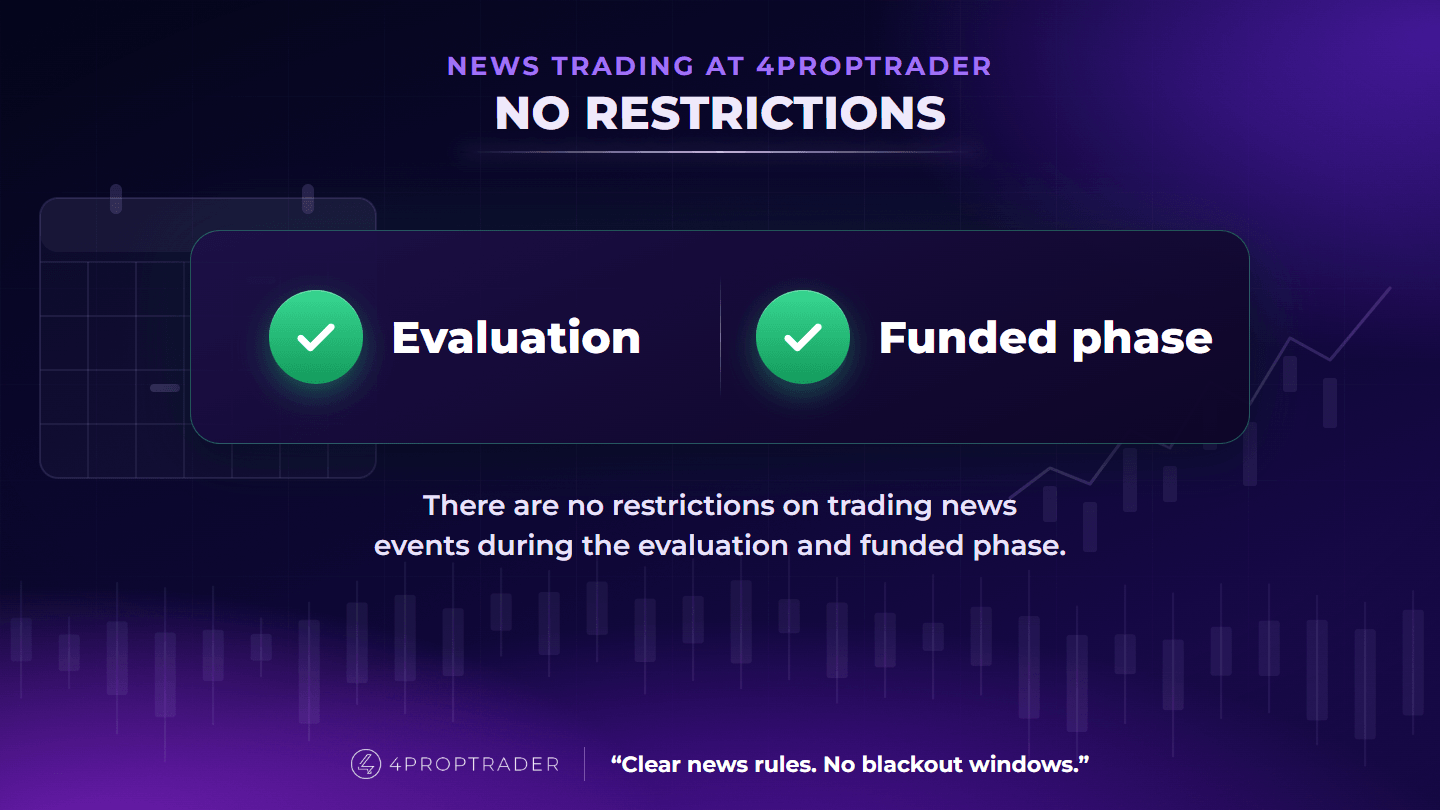
4PropTrader's news policy is simple: there are no restrictions on trading news events during the evaluation and funded phase. In plain terms, news trading is allowed, and there is no event list to memorise and no blackout window to watch.
Directories often show “news trading allowed” as a yes-or-no label. Here, that label is a plain yes. The firm allows traders to take positions before, during and after a release, which fits a firm built on transparent rules.
Unrestricted does not mean unlimited. Firms usually pair their policy with other limits such as a profit target, a daily loss limit, and consistency rules, so read the full rulebook alongside this article.
Futures and CFD Challenges
Pick the account type that fits how you trade. Futures follow a single-phase evaluation, while CFDs offer 1-step and 2-step challenge models. Compare the account options before you apply, and look for a flexible evaluation structure rather than a one-size-fits-all path.
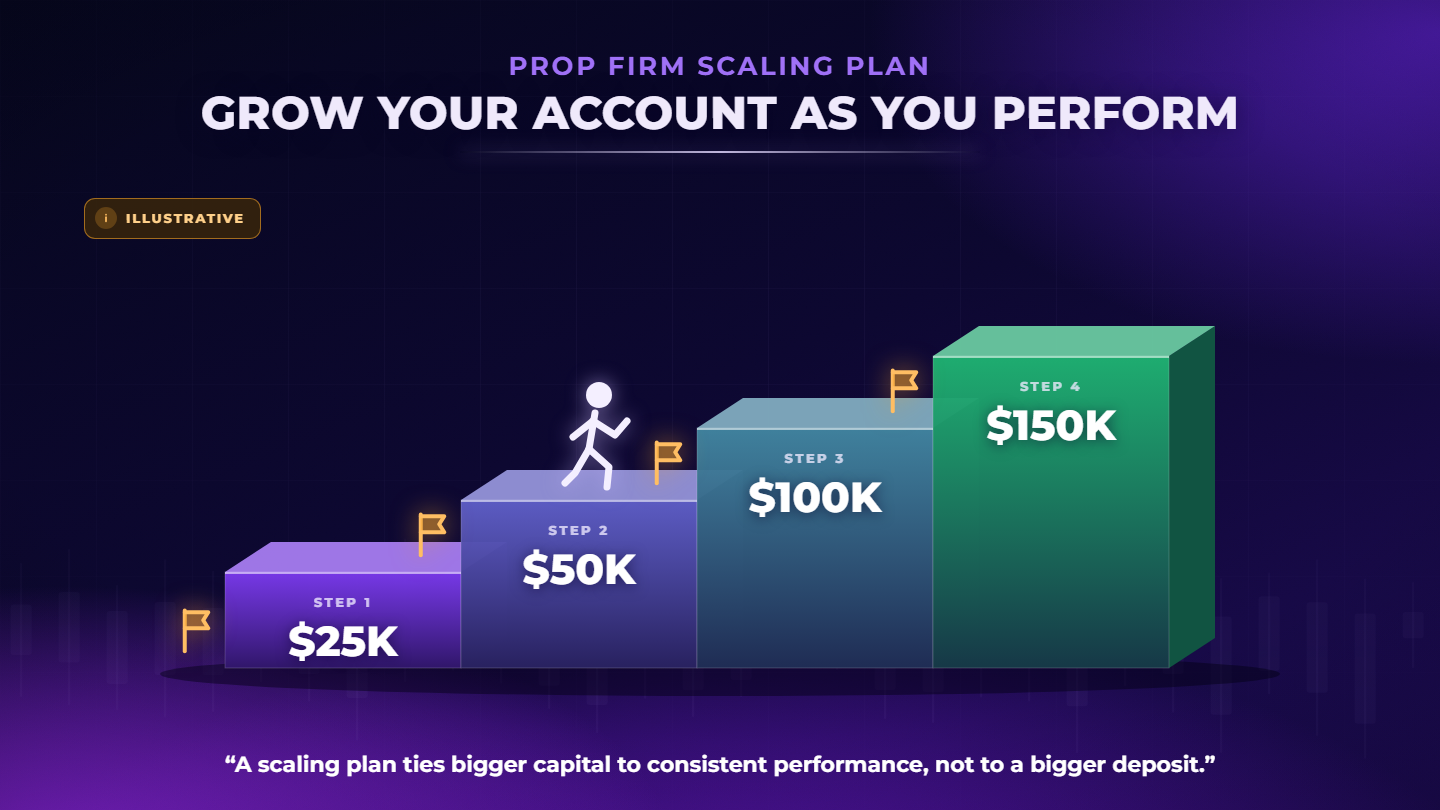
You can hold up to 7 funded accounts, mixing sizes and combining Futures and CFD. Each one needs its own challenge and runs its own limits and payout rules. There is no scaling plan, but running several accounts side by side creates scaling opportunities of its own.
What Happens Around a Release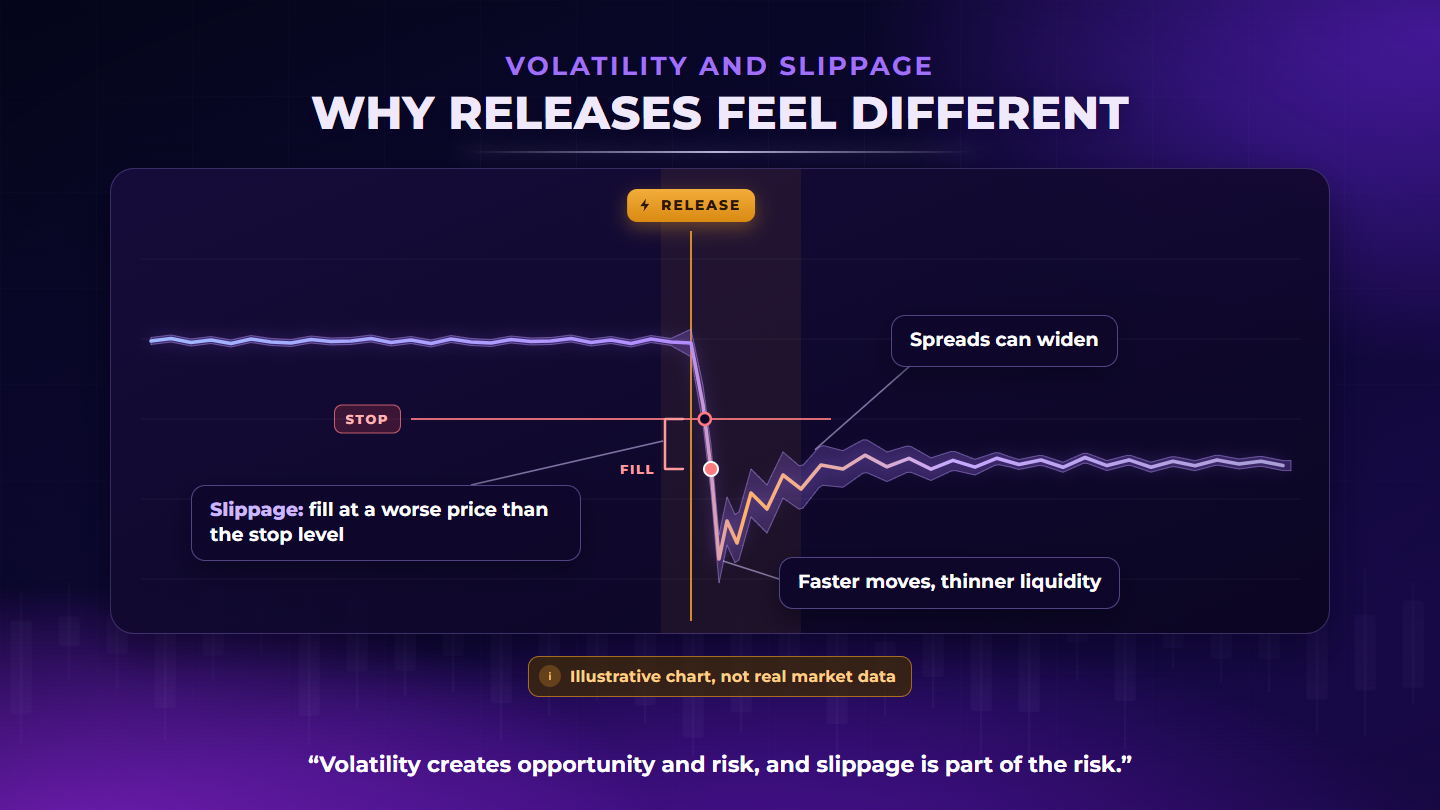
Volatility rises sharply in the seconds around a release. Prices can jump several ticks at once and skip the levels in between. Three effects follow.
· Wider spreads: the tight spreads you see on a quiet morning can vanish as quotes are pulled and the gap between bid and ask opens.
· Thin books: even markets with real liquidity can thin out for a few seconds, so size that fills easily at 10:00 may not fill cleanly at 14:30.
· Fill quality: a market or stop order can fill at a worse price than the one you expected, and that slippage is part of the true cost of trading a release.
Your broker or platform may also show delayed quotes in these moments, so the price on your screen is not always the price you receive.
How to Manage Releases Calmly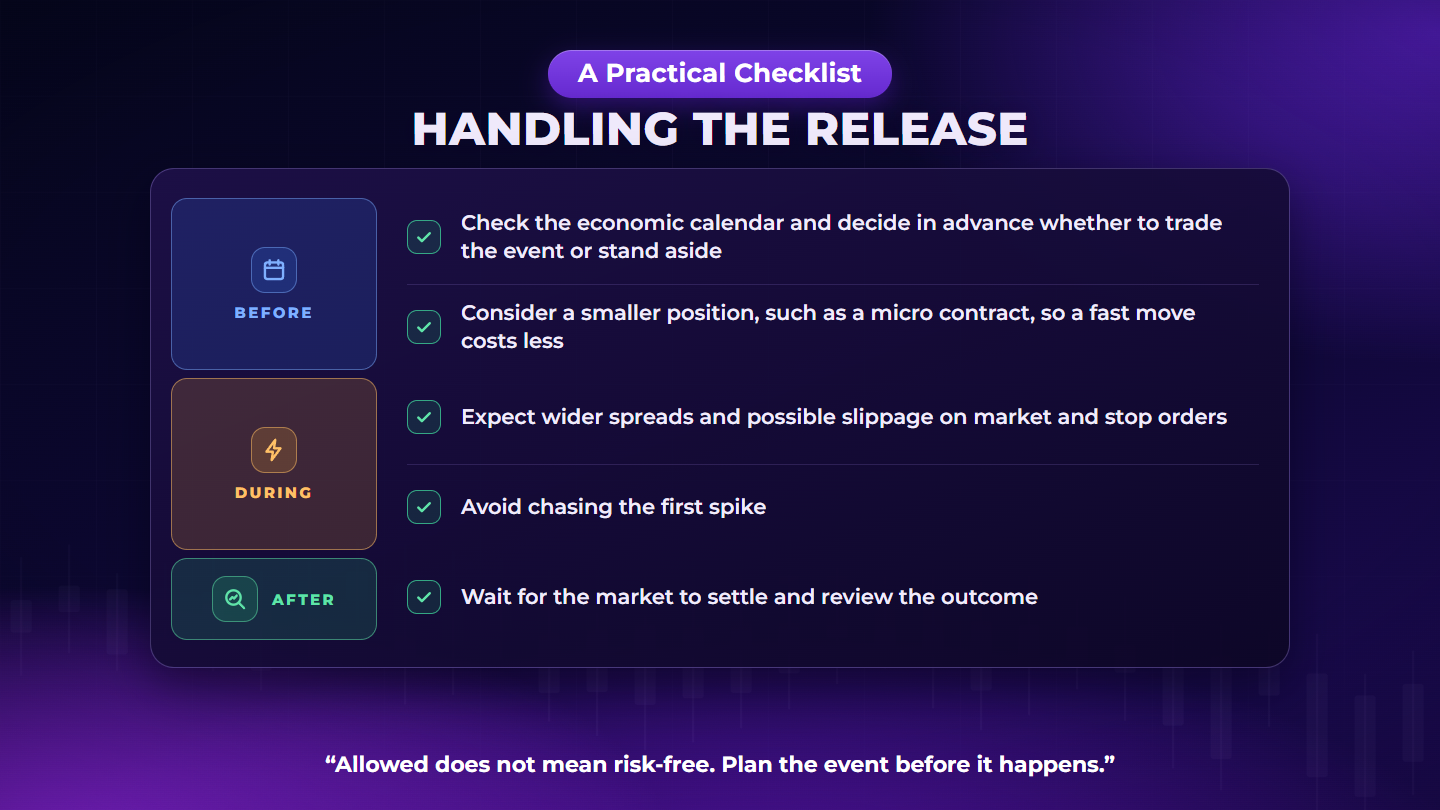
Successful traders usually decide their plan before the release, not during it. A simple routine helps.
· Check the calendar the evening before and mark the events that affect your products.
· Decide in advance whether you will trade the event, wait for it to settle, or stand aside. Traders who want to avoid the noise can simply skip it.
· Use a stop loss, but accept that it may not fill at the level you chose.
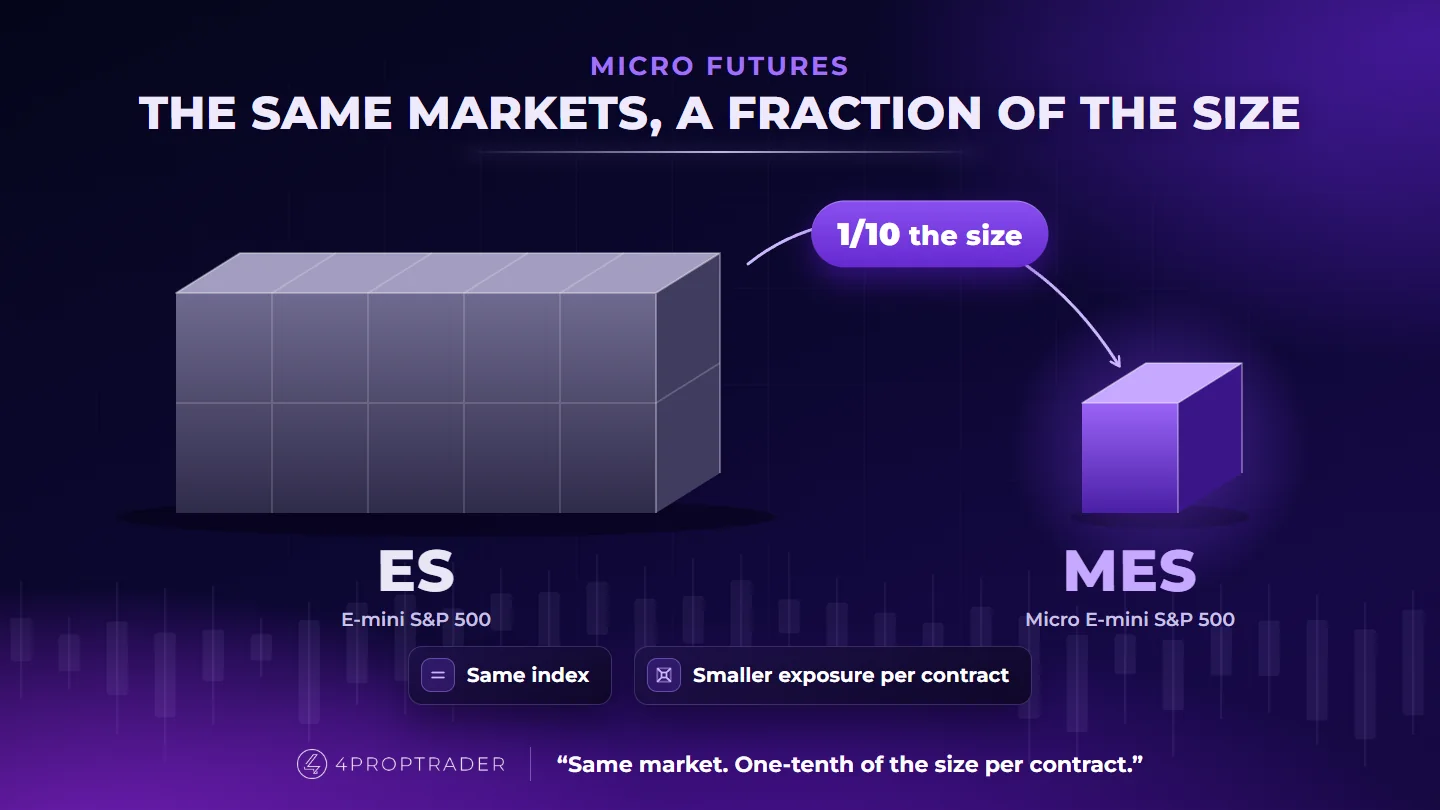
· Trade smaller. Micro contracts such as MES and MNQ cut the dollar swing per tick to one-tenth of the mini, which helps when moves are fast.
· Do not chase the first spike. Many traders prefer trading around major market events by waiting for the initial move to settle and then working the reaction.
Treat the release as a risk management decision first and an opportunity second. Your trading styles and trading strategies should decide whether you engage at all: day trading setups can use a release as a catalyst, while swing approaches often avoid holding through it. Technical analysis levels such as prior highs and lows often matter more than the headline number.
Trading using a pre-written checklist cuts down impulsive decisions. Automation such as EAs can behave differently in fast markets too, so test it before relying on it. Our accounts use simulated trading, which lets you rehearse a release plan without risking your own capital.
Afterwards, review your trading results and trading performance for each release. Consistent profitability comes from a repeatable plan, not from catching one spike, and your trading experience will compound faster if you record what you did.
How the EOD Limit Behaves in Fast Markets
Some firms apply static drawdown limits, a fixed level that never moves. We use an EOD drawdown instead. As your balance grows, it adjusts upward by a fixed increment, calculated at the end of each day. If your balance falls, it stays unchanged.
Once it reaches your initial starting balance, it becomes fixed for the rest of the challenge. If your balance touches or falls below that value, the account becomes ineligible for funding. You can follow the level on your trading dashboard. A sharp release move can bring you to it quickly, which is one more reason to keep position size modest on release days.
Getting Paid
Fast payouts matter to most traders. Here, withdrawal requests can be submitted at any time and are processed within 48 hours, and arrival can take up to five business days. You can withdraw profits by Bank Wire, PayPal, or USDT on the Tron network.
The profit split is 95%, and the first $8K in total is paid 100% to the trader.
Choosing a Prop Firm: A Checklist for News Rules
· Is the policy written down clearly, and does it cover both phases of the account?
· Are there restriction windows, and what is the penalty for a breach? Firms often leave the details in the fine print.
· Read the full trading rules, not just the marketing page. Headline sizes such as 100K look attractive, but the rules decide what you can actually do.
· Check the platform. Many firms offer MT5 trading on the MetaTrader 5 platform. We run Futures through app trading and CFD products through WebTrader and mobile trading instead.
· Weigh the extras, such as cashback offers, dedicated support, and success stories, but check each one against the written rules.
· Listen to the trading community, but treat any single forum post with caution.
There is no single list of the best prop trading firms for everyone. The best prop firm trading setup is the one whose rules match how you actually trade, and the safest pick is a transparent prop trading firm that states the same rules everywhere it appears. Passing the evaluation is only the first step, because the rules that apply after funding matter just as much.
Frequently Asked Questions
Can I trade NFP, CPI and FOMC releases with you?
Yes. There are no restrictions on trading releases, and no blackout windows, in either phase.
Do wider spreads affect my fills?
They can. Quotes thin out around a release, so orders may fill away from the price you expected. Smaller size and a plan help.
Should I hold positions through a release?
It depends on your approach. Holding through a release is a larger risk than waiting for the move to settle, so decide before the event.
Do you support MT4 or MT5?
No. Futures run through app trading, and CFD products run through WebTrader and mobile trading.
How long do withdrawals take?
Requests are processed within 48 hours and can take up to five business days to arrive.
Final Thoughts
News releases are neither something to fear nor something to ignore. They are scheduled, visible on the calendar, and predictable in character if not in direction. The firms you compare will treat them differently, so the rule is worth checking before you pay for anything.
At 4PropTrader, there are no news restrictions, which puts the decision and the responsibility with you. Plan the event, keep size modest, and read the wider challenge rules in our complete guide so nothing else catches you off guard.
Disclaimer: Past performance does not guarantee future results. Trading futures and CFD products involves substantial risk of loss and is not suitable for everyone. Release times are typical and can change. Examples are illustrative, and the rules of any firm should be confirmed directly before you apply.
Trade under clear, transparent news rules — apply for a funded Futures or CFD account with 4PropTrader today